
There is a particular kind of masala that shows up in Indian kitchens in different forms depending on the region, the family, and the vegetable — but the principle is always the same. A coarse, aromatic spice blend, dry roasted until fragrant, packed into the cavity of a vegetable or tossed through a stir fry, and cooked low and slow until everything melds together into something deeply savoury and completely satisfying.
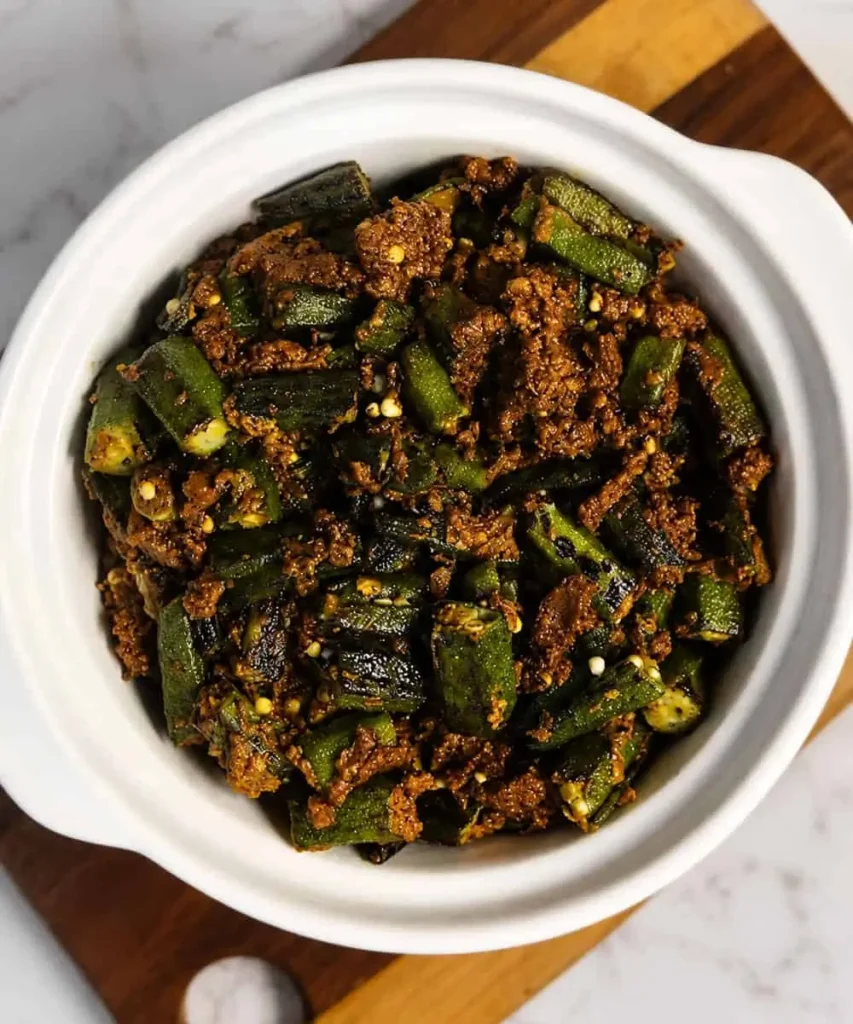
This is that masala — made as a premix so you grind it once, store it in a glass jar, and reach for it all week. Perfect for stuffed bhindi (okra), baingan (eggplant), karela (bitter gourd), parwal, and any other vegetable that benefits from a bold, nutty, spiced filling. In this post the recipe is demonstrated with bhindi — stir fried until slightly charred at the edges and coated in the masala with a tomato and yogurt base. Serve it with paratha and it is a complete meal.
The Premix — Dry Roast Everything Low and Slow
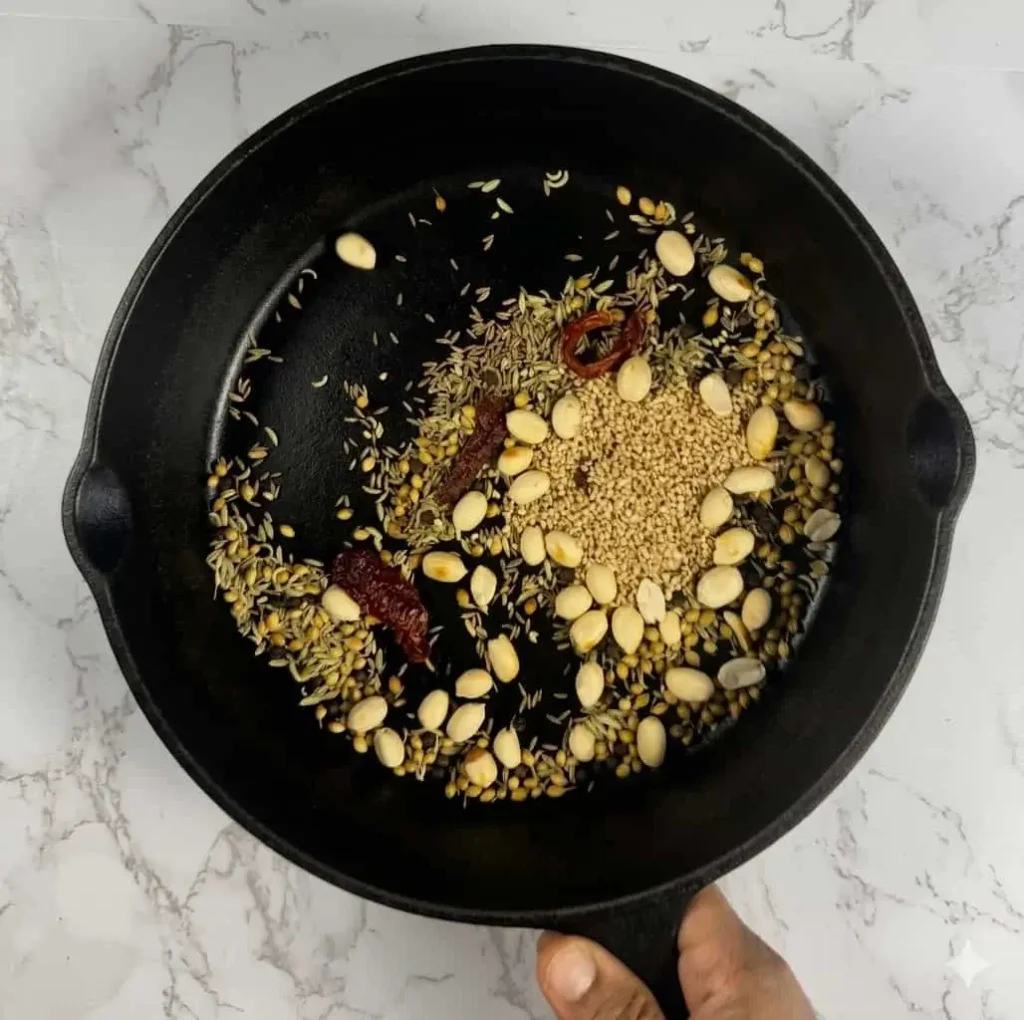
The foundation of this masala is a proper dry roast. Low heat, patience, and your nose — when everything smells toasted and fragrant, it is done. Rushing with high heat burns the spices on the outside before the inside is roasted, and you lose the depth that makes this blend so good.
In a dry pan on low heat, roast together:
- Fennel seeds — sweet, anise-like, the aromatic backbone
- Cumin seeds — earthy and warm
- Coriander seeds — citrusy and slightly nutty when roasted
- Black peppercorns — sharp heat that builds slowly
- Dry red chilies — colour and a clean, direct heat
- Peanuts — roast until the skins begin to blister and crack
- Sesame seeds — nutty, slightly bitter, and one of the most important elements for texture in the ground blend
Keep stirring. Everything needs even heat. Once the seeds are fragrant and the peanuts are lightly golden, turn the heat off.
Then, with the heat off, add 2 tablespoons of besan (gram flour). The residual heat of the pan is enough to cook the besan slightly — you will smell it turn nutty almost immediately. This is the step that sets this masala apart. Besan adds body, a subtle nuttiness, and helps the masala cling to the vegetables when it cooks.
Let everything cool completely before grinding.
Grinding — Coarse, Not Fine
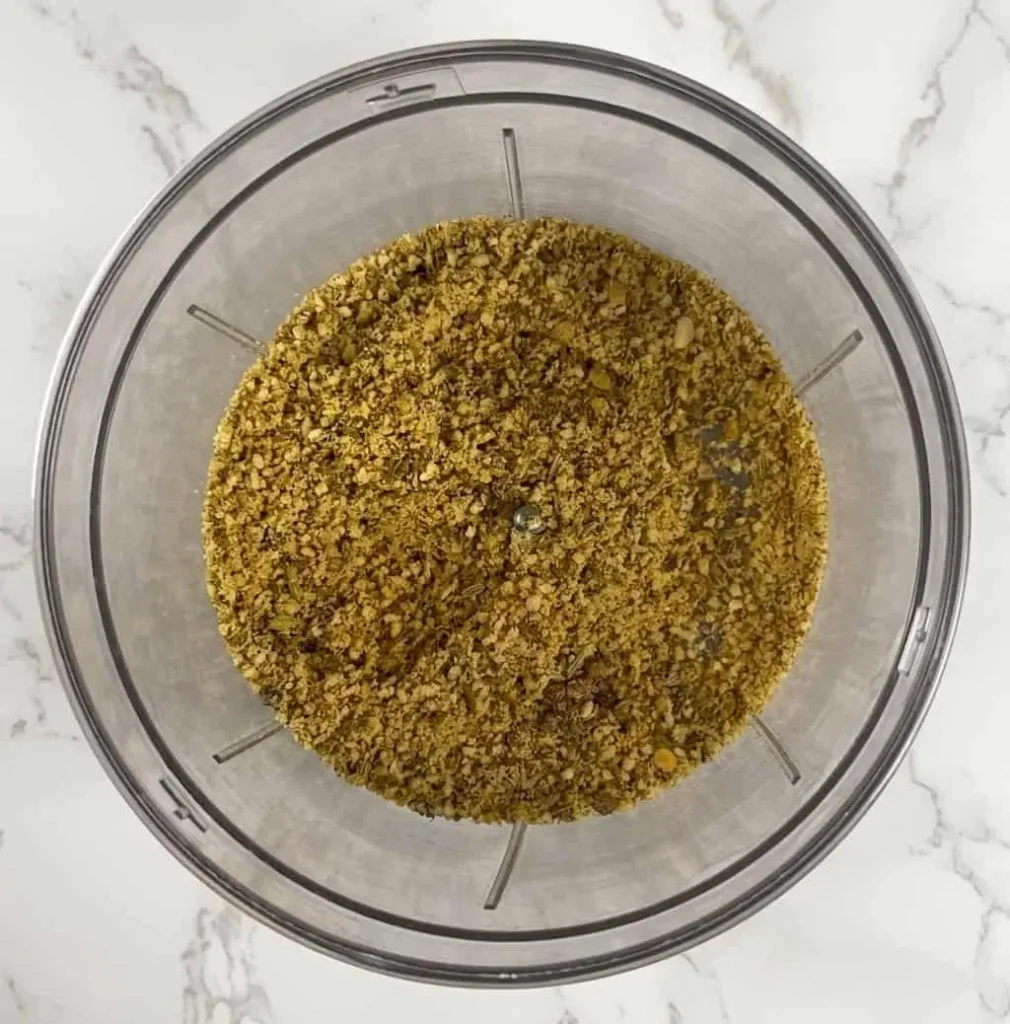
Grind to a coarse powder — not a fine dust. You want visible texture, small pieces of peanut and sesame still present. This coarseness is what gives the stuffed vegetable its bite and what stops the masala from disappearing into the cooking liquid.
Once ground, add to the bowl:
- Kashmiri red chili powder — for deep colour and mild, fruity heat without aggression
- Turmeric — earthy and warming
- Mango powder (amchur) — sharp, tangy, and essential for the balance of the whole blend
Mix through and transfer to a clean, dry glass jar. The premix keeps at room temperature for 1 to 2 weeks — longer in the fridge.
Cooking With It — Demonstrated With Bhindi
Step one: stir fry the bhindi. In a little oil on high heat, stir fry the okra until the edges are slightly charred and the stickiness has cooked off. This step is important — properly stir fried okra that has a little char holds its texture through the masala cooking and does not go slimy. Set aside.
Step two: build the base. In the same pan, add a little oil and fry ginger garlic paste until the raw smell is gone. Add the masala premix and sauté for a minute until fragrant. Add 2 tomatoes worth of purée and cook until the oil begins to separate from the masala — this is the signal that the tomatoes are fully cooked and the base is ready.
Step three: add yogurt. Once the oil loosens up, add 2 tablespoons of yogurt and stir through quickly. The yogurt adds creaminess and a gentle tang that balances the heat of the masala and the acidity of the tomato.
Step four: add the okra back in. Fold the stir fried bhindi through the masala base and cook for 2 to 3 minutes on low heat until everything is coated and heated through.
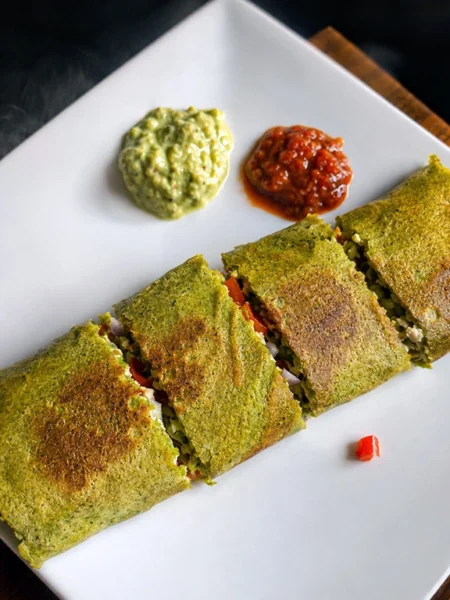
Serve with paratha, hot off the tawa.
On the yogurt: Add it once the oil has loosened in the masala — not before. Adding yogurt to a very hot, dry masala can cause it to split. The loosened oil is the signal that the temperature and consistency are right.
Using the Premix for Other Vegetables
Stuffed baingan (eggplant): Score the eggplant deeply without cutting through. Pack the dry premix generously into the cuts. Cook covered on low heat in a little oil, turning occasionally, until tender and charred on the outside.
Stuffed karela (bitter gourd): Slit lengthwise, remove seeds, rub with salt and leave for 30 minutes to draw out bitterness. Rinse, dry, and fill generously with the premix. Tie with thread or secure with a toothpick. Pan fry on low heat in oil, covered, until cooked through and caramelised.
Parwal: Slit and stuff the same way as karela. Pan fry covered on low until tender.
The premix quantity and method remains the same across all of these — the vegetable changes, the masala does not.
Watch the Recipe
See it made with bhindi: @binalstastytales
Stuffed Vegetable Masala Premix — One Spice Blend for Okra, Eggplant, Karela and More
Description
A versatile stuffed vegetable masala premix — dry roasted spices, peanuts, sesame, and besan ground coarse. Perfect for bhindi, baingan, karela and parwal. Store for up to two weeks.
Ingredients
For the premix — dry roast together:
Add after grinding:
For the bhindi dish:
Instructions
-
Make the premix
Dry roast fennel, cumin, coriander, peppercorns, dry red chilies, peanuts, and sesame seeds on low heat, stirring continuously, until fragrant and the peanuts are lightly golden. Turn off the heat and immediately add the besan. Stir for 30 seconds in the residual heat. Cool completely, then grind to a coarse powder. Mix in the Kashmiri red chili powder, turmeric, mango powder, and salt. Transfer to a glass jar.
-
Stir fry the okra
Heat oil in a pan on high heat. Add the okra and stir fry until the edges are slightly charred and no stickiness remains — about 7 to 8 minutes. Set aside.
-
Build the masala base
In the same pan, add oil and fry the ginger garlic paste for 1 minute. Add 3 to 4 tablespoons of the premix and sauté for a minute until fragrant. Add the tomato purée and cook until the oil separates from the masala.
-
Add yogurt and okra
Add the yogurt and stir through quickly. Add the stir fried okra and fold through on low heat for 2 to 3 minutes until coated. Serve with paratha.
Note
Made this premix? Tag me at @binalstastytales — and tell me which vegetable you used it with.