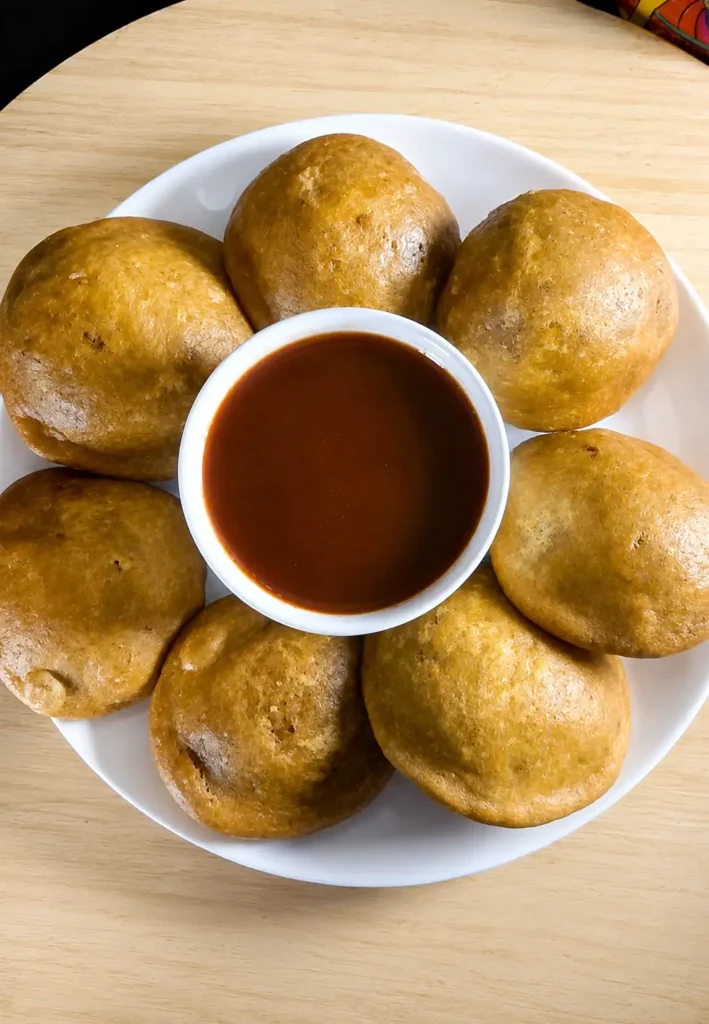

There are some recipes that ask for patience and give back something extraordinary in return. Mung dal kachori is one of them. A flaky, semi-stiff all-purpose flour shell encasing a dry-roasted, spiced mung dal filling — deep fried low and slow until puffed, golden, and shatteringly crisp. Served with green chutney and tamarind chutney, with a cup of chai on the side, this is the kind of food that makes an ordinary afternoon feel like a celebration.
This is a recipe that has been made in Indian kitchens for generations, and the reason it has stayed is simple — it is genuinely one of the most satisfying things you can eat. The shell has layers. The filling has depth. And when you bite through the crisp exterior into the spiced dal inside, it delivers in a way that no shortcut version ever could.
Make it once properly and you will understand why people drive across cities for a good kachori.
The Dough — Semi-Stiff and Rested
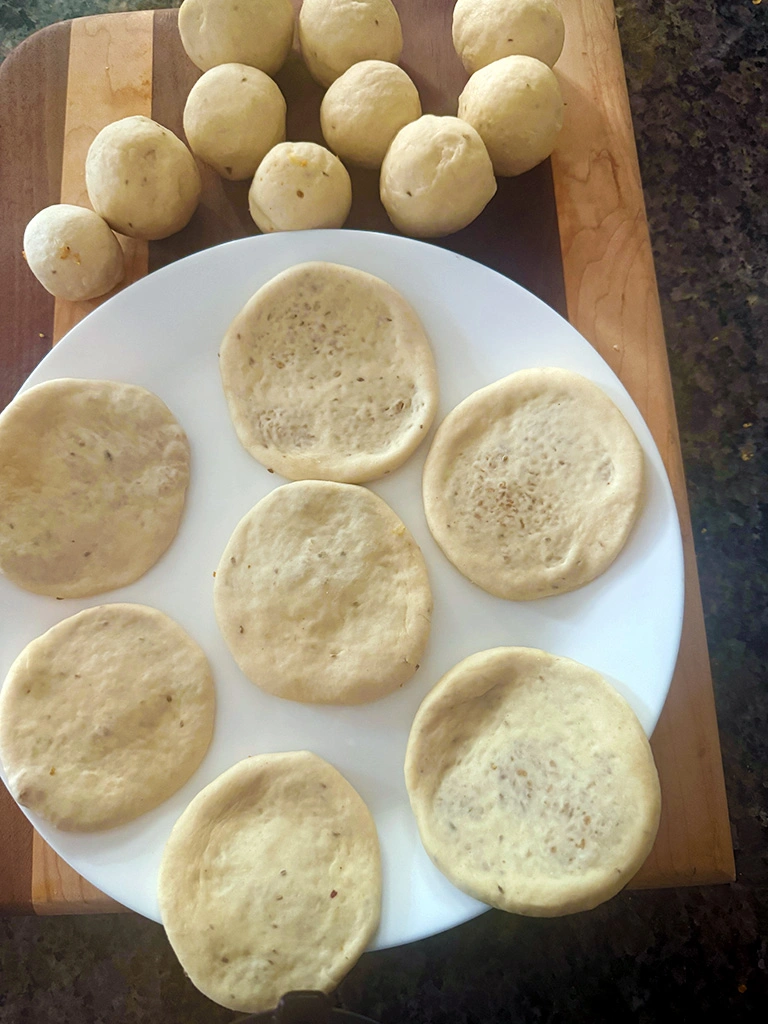
The kachori dough is different from a puri dough or a paratha dough. It needs to be semi-stiff — firm enough to hold its shape when flattened and stuffed, pliable enough to seal without cracking. Too soft and the kachori will not puff properly; too tight and it will crack around the filling.
In a large bowl, combine the dry ingredients first:
- 2 cups all-purpose flour (maida)
- Carom seeds (ajwain) — a generous pinch, lightly crushed. They add a warm, slightly medicinal flavour that is very characteristic of kachori dough and also aid digestion in a fried-food-heavy dish
- A small knob of ghee — rubbed into the flour until the mixture resembles coarse breadcrumbs. This is the fat that creates flakiness in the shell
- ⅛ tsp baking soda — a small amount that gives the dough a very slight lift during frying
- Salt to taste
Once the dry ingredients are combined and the ghee is fully rubbed in, add water gradually — a little at a time — and knead until a semi-stiff dough comes together. It should feel firmer than a roti dough but not hard. Cover with a damp cloth and rest for 20 to 30 minutes.
On rubbing in the ghee: This step is important and worth doing properly. Rub the ghee between your palms and fingers until every bit of flour is coated and the mixture holds together briefly when pressed. This is what creates the flaky, layered texture in the fried shell — the same principle as shortcrust pastry.
The Mung Dal — Soaked and Coarsely Ground
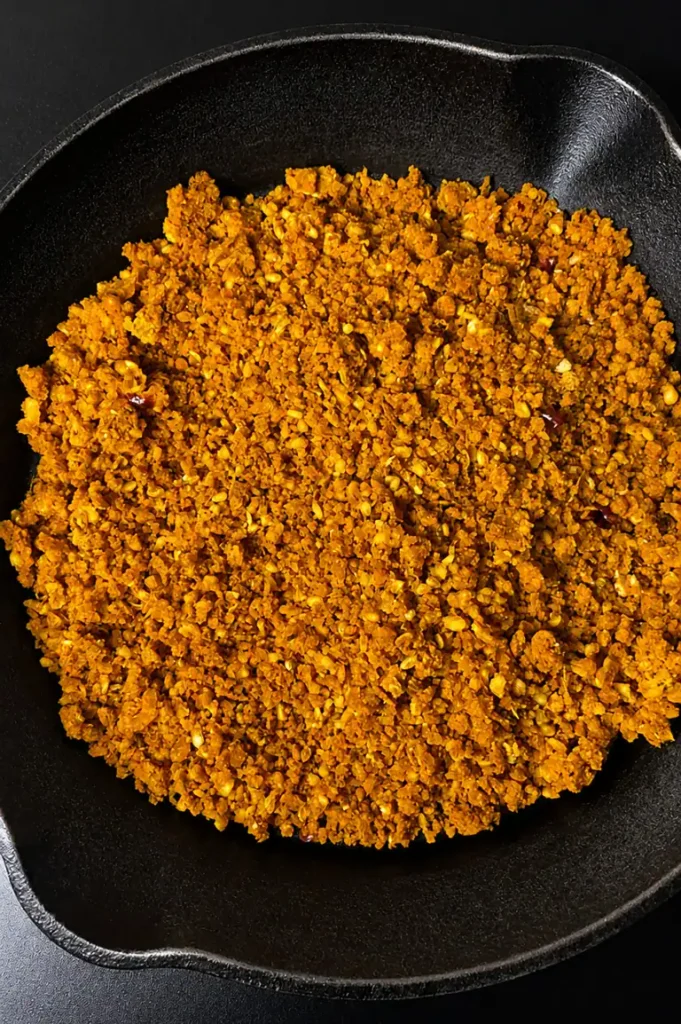
The filling starts the night before — or at least 4 to 5 hours before cooking. Yellow mung dal soaked until swollen and tender, then coarsely ground with green chilli and fresh ginger. Not smooth, not whole — somewhere in between. You want visible texture, small pieces of dal still present, not a paste. This coarseness is what gives the kachori filling its characteristic bite.
Grind in short pulses rather than a continuous blend. Stop when you have a rough, cohesive mixture that still has texture. Set aside.
The Spice Mix — Dry Roasted Whole Spices
This is the step that elevates this kachori from good to exceptional. A separate dry roast of whole spices, cooled, and coarsely ground — then added to the filling as a flavour layer rather than just stirring in ground spice powder from a jar.
In a dry pan on low heat, roast together until fragrant:
- Whole coriander seeds
- Black peppercorns
- Fennel seeds (saunf)
- Dry red chilies
- Cumin seeds
Stir continuously and watch carefully — whole spices go from perfectly roasted to burnt quickly. Once they are fragrant and very slightly darkened, take them off the heat immediately and spread on a plate to cool. Grind coarsely once cool.
The aroma of this spice mix when it hits the hot oil in the next step is extraordinary.
Building the Filling — Dry and Cohesive
The filling must be completely dry before it goes into the kachori. Any moisture left in the filling will create steam inside the kachori during frying, which weakens the seal and can cause it to burst or blister unevenly.
In a pan, heat 2 tablespoons of oil. Add the coarsely ground spice mix and roast for a minute until the oil carries the fragrance. Then add 2 tablespoons of besan (gram flour) — this is the binding agent that holds the filling together inside the kachori. Stir for 30 to 45 seconds until the besan smells nutty.
Add the ground mung dal and roast everything together on medium heat, stirring continuously, until the mixture is completely dry and comes away cleanly from the pan. This takes 8 to 10 minutes — do not rush it.
Once dry, add:
- Mango powder (amchur) — tang and brightness
- Garam masala — warmth and depth
- Salt to taste
- Red chilli powder — adjust to your heat preference
Stir through and take off the heat. Spread on a plate and cool completely before shaping into balls. Warm filling is too soft to handle cleanly.
On the filling texture: Once cooled, the filling should hold its shape when pressed into a ball without crumbling or sticking to your hands. If it is crumbling, it needs slightly more roasting time. If it is sticking, it may still have a little moisture — return to the pan for a few more minutes.
Stuffing and Shaping
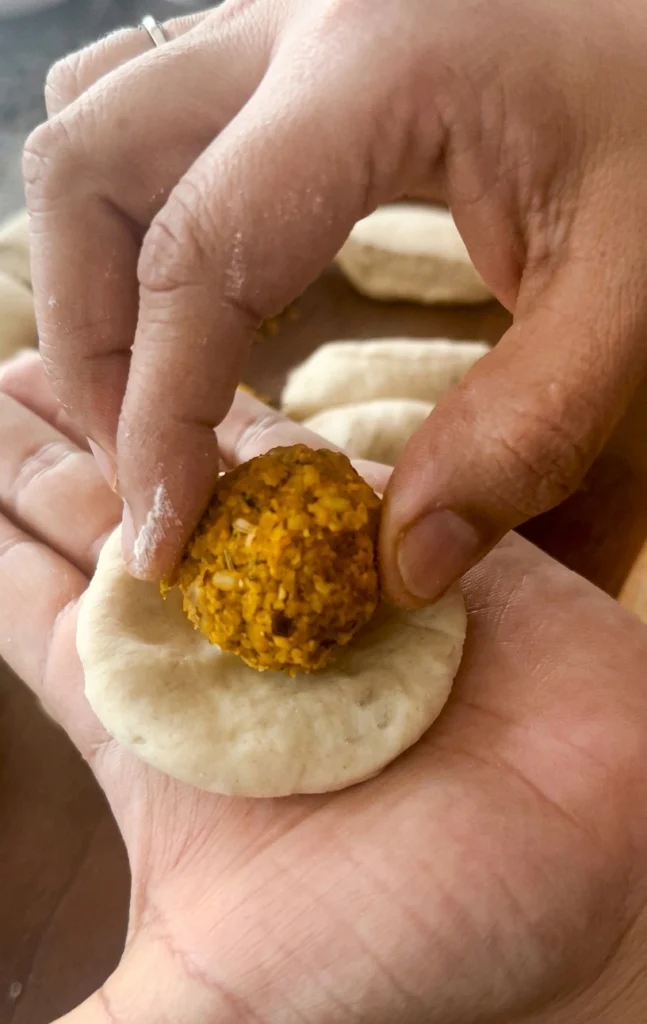
Divide the dough into equal balls — slightly larger than a golf ball. Divide the filling into slightly smaller balls, one per dough ball.
Flatten a dough ball into a disc with your palm. The disc should be slightly thicker in the centre than at the edges — this compensates for the stretching that happens when you seal in the filling. Place the filling ball in the centre. Bring the edges of the dough up around the filling in small pleats, pressing firmly to seal. No gaps, no thin spots. Press the sealed ball gently between your palms to flatten slightly — not rolling pin flat, just gently compressed.
The sealed edge is the most vulnerable part of the kachori during frying. Press it firmly and smooth it over so it blends into the surface of the dough.
Frying — Low Heat and Patience
This is the step that most home cooks rush, and rushing is the reason for blistered, uneven, or undercooked kachoris.
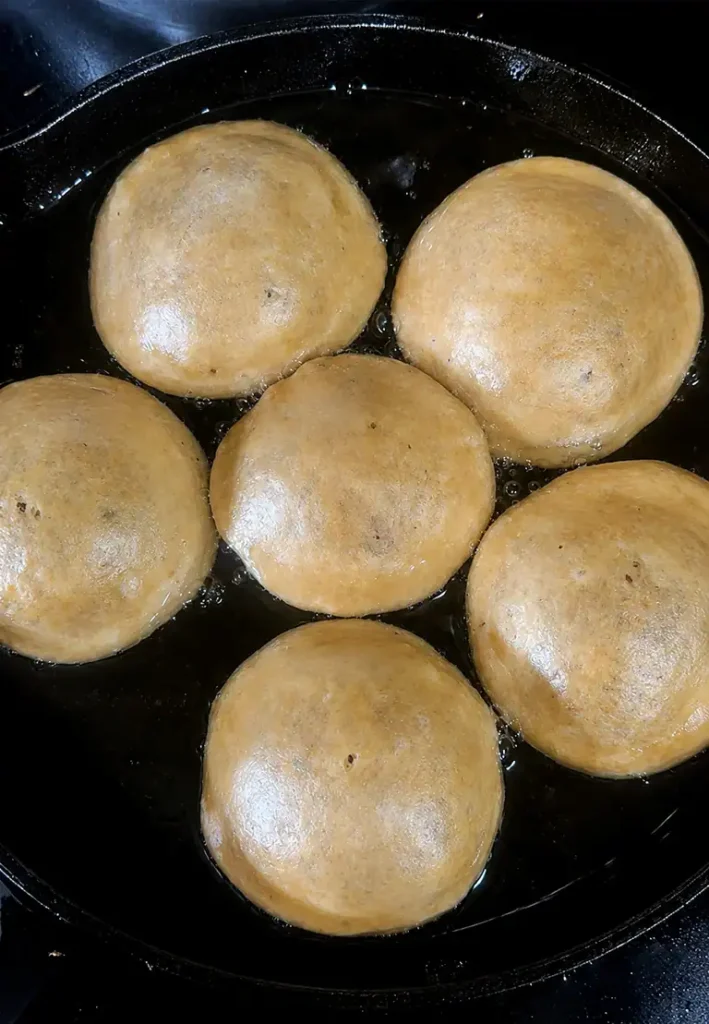
Heat oil in a deep pan to low to medium heat — not hot. Test with a small piece of dough; it should rise to the surface slowly, not immediately. If it shoots up and browns within seconds, the oil is too hot.
Slide the kachori gently into the oil. It will sink first, then slowly rise as it cooks. Do not touch it for the first minute. Let it find its own level. Then begin spooning hot oil over the top — the same technique as the raj kachori — to encourage even cooking on the sides that are not submerged.
As the kachori cooks, it will puff. The puff is the sign that everything is working — the steam inside the dough is expanding, the layers are separating, the shell is becoming crisp. If you fry on high heat, the outside browns before the inside cooks through, and the kachori will have bubbles on the surface and a doughy interior. Low and slow is the only way.
Fry for 10 to 12 minutes, turning occasionally, until deep golden and crisp all over. Drain on kitchen paper.
On the puff: A fully puffed kachori is not always guaranteed — the seal, the dough thickness, and the oil temperature all play a role. Even a kachori that does not puff completely will taste excellent if the dough is right and the frying is done on low heat. The puff is beautiful; the flavour is what matters.
Serving
Serve hot with green coriander chutney and tamarind chutney — the two chutneys are not interchangeable here, they are complementary. The green chutney brings fresh, spicy, herby brightness. The tamarind brings sweet, sour depth. A kachori needs both.
Alongside a cup of chai, this is one of the most comforting combinations in Indian food. It also keeps well — stored at room temperature in an airtight container, kachoris stay crispy for up to a week and reheat well in an air fryer or oven.
Watch the Recipe
Recipe video coming soon — stay connected at @binalstastytales
Mung Dal Kachori — Crispy, Flaky, and Worth Every Minute
Description
Mung dal kachori from scratch — flaky maida shell, dry roasted spice mix, and spiced mung dal filling. Deep fried low and slow until golden and crisp. Serves with green and tamarind chutney.
Ingredients
For the dough:
For the mung dal filling:
For the whole spice mix — dry roast together:
To build the filling:
For frying:
To serve:
Instructions
-
Make the dough
Combine flour, ajwain, baking soda, and salt. Rub ghee in thoroughly until the mixture resembles coarse breadcrumbs. Add water gradually and knead to a semi-stiff dough. Cover with a damp cloth and rest for 20 to 30 minutes.
-
Grind the mung dal
Drain the soaked mung dal. Coarsely grind with green chilies and ginger in short pulses — textured, not smooth. Set aside.
-
Dry roast the spice mix
Dry roast coriander seeds, peppercorns, fennel seeds, dry red chilies, and cumin seeds on low heat until fragrant. Cool completely and grind coarsely.
-
Build the filling
Heat 2 tbsp oil in a pan. Add the coarse spice mix and roast for 1 minute. Add besan and stir for 30 to 45 seconds until nutty. Add the ground mung dal and roast on medium heat, stirring continuously, until completely dry and comes away from the pan — 8 to 10 minutes. Add mango powder, garam masala, red chilli powder, and salt. Mix and cool completely. Shape into small balls.
-
Stuff and shape
Flatten a dough ball into a disc, thicker in the centre. Place a filling ball in the centre, bring edges up and press firmly to seal. Flatten gently with your palm.
-
Deep fry
Heat oil to low-medium temperature. Slide kachori in gently. Fry for 10 to 12 minutes on low heat, spooning oil over the top, turning occasionally, until deep golden and crisp. Drain on kitchen paper.
-
Serve
Serve hot with green chutney, tamarind chutney, and chai.
Note
Made these? Tag me at @binalstastytales — I want to see that puff.