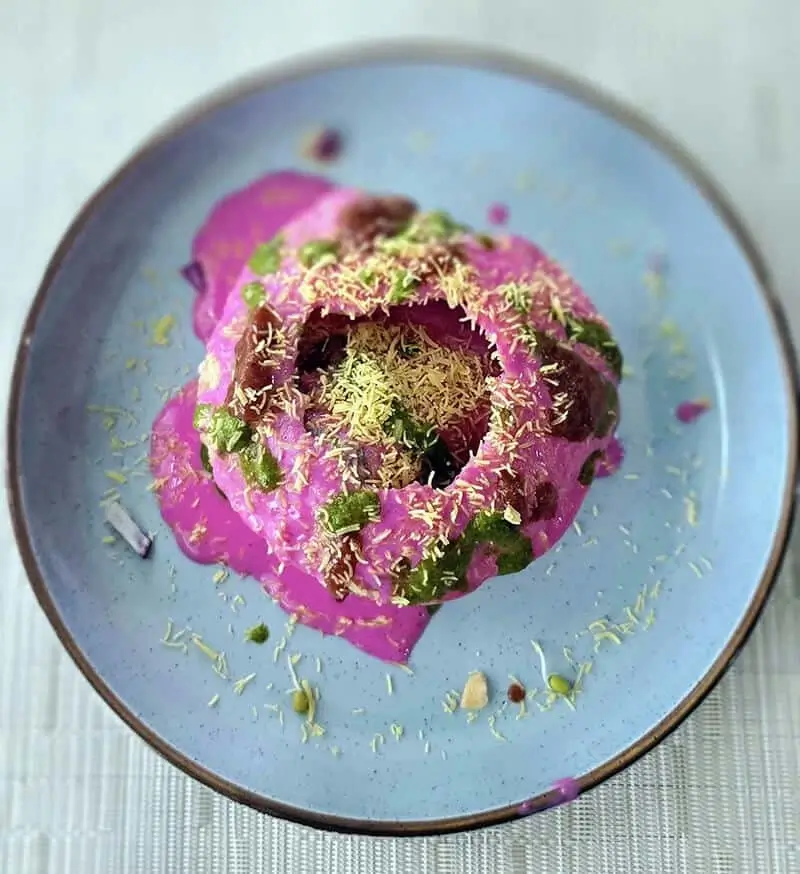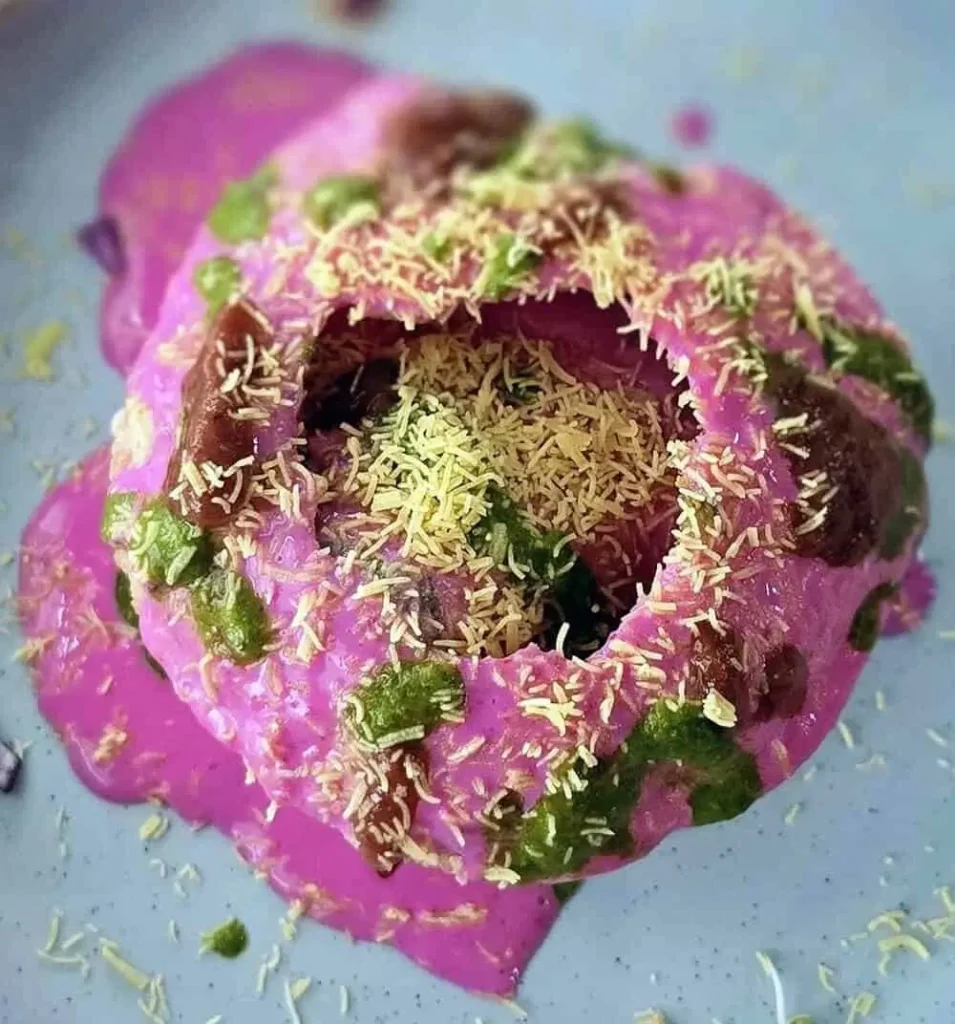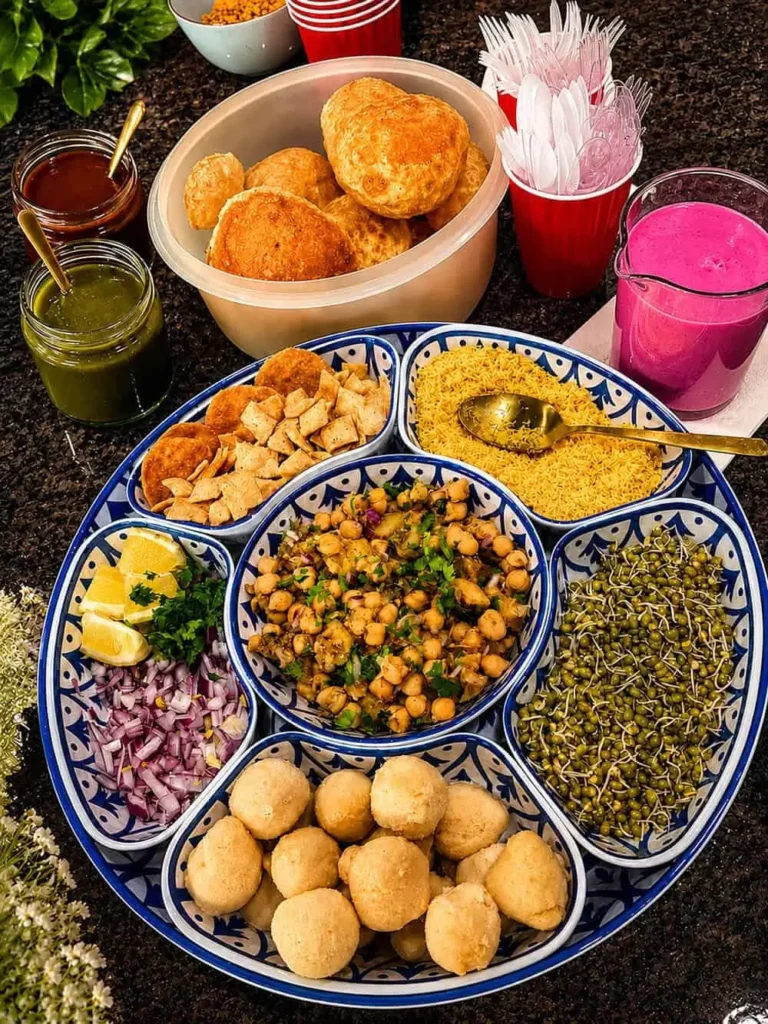

If there is one dish that stops a party in its tracks, it is raj kachori. A giant, golden, shatteringly crisp shell filled with mung dal bhalla, green sprouts, crunchy papadi, pomegranate, onion, and fine nylon sev — then drowned in tamarind chutney, spicy green chutney, and sweet tangy yogurt. And if you want to take it fully gourmet, blend beetroot into the yogurt until it turns a deep jewelled pink. Place it on the table and watch what happens.
This is celebratory food in the truest sense — made for occasions, made to impress, and made entirely from scratch. The kachori shells can be made two weeks ahead and stored at room temperature, which means on the day of the party your only job is assembling. That is the kind of recipe that makes hosting feel effortless.
The Kachori Shell — Dough and Stuffing
The raj kachori shell is larger and sturdier than a regular kachori — it needs to hold everything that goes inside without collapsing. The combination of all-purpose flour and coarse semolina gives it its characteristic crunch and the structural integrity to hold a generous filling.
The Dough
1 cup all-purpose flour (maida) and ⅓ cup coarse semolina (sooji). No salt needed. Mix together and add water gradually until you have a soft, smooth dough — softer than you think it needs to be. A tight dough will crack when rolled and will not puff properly in the oil. Cover and rest for 20 to 30 minutes.
The semolina is what gives the shell its signature crunch even after it cools — it stays crispy far longer than a plain maida dough would, which is why these keep so well at room temperature.
The Stuffing
Fine gram flour (besan), turmeric or a little food colour, ⅛ tsp baking soda, and water. Mix into a soft dough — similar consistency to the outer dough. The baking soda helps the stuffing puff slightly inside the shell as it fries, creating a light, airy interior that contrasts beautifully with the crispy exterior.
The turmeric gives the stuffing a warm golden colour when it fries. A small pinch of food colour can be used instead for a more vivid effect — both are traditional.
Rolling and Frying — The Technique
Roll the dough into equal-sized balls and the stuffing into slightly smaller balls — one stuffing ball per dough ball.
Flatten a dough ball into a disc with your palm. Place the stuffing ball in the centre. Bring the edges of the dough up and over the stuffing, press firmly to seal, and roll gently between your palms until smooth. No seam should be visible.
Roll the stuffed ball out to a disc — not too thin, not too thick. Too thin and the shell will not have enough body to hold the fillings; too thick and it will not crisp properly all the way through. Aim for a thickness somewhere between a thick roti and a puri.
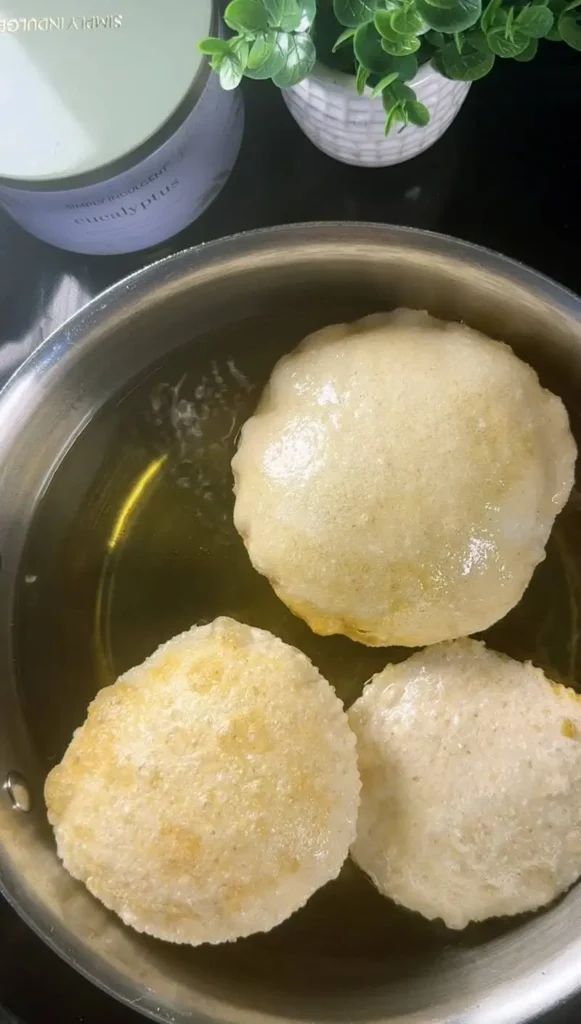
Deep fry on medium heat — not high. Patience here is everything. The kachori needs time to cook through to the centre before the outside over-browns.
The most important frying tip: As the kachori puffs up in the oil, the sides rise above the oil level and stop getting direct heat — which is why they often stay soft. Keep spooning hot oil over the sides continuously as it fries. This is what ensures an evenly golden, crispy shell all the way around, not just on the bottom. Do not stop basting until the kachori is fully golden.
Drain on kitchen paper and cool completely before storing or assembling.
Storing the Kachori Shell — Up to 2 Weeks
Once completely cool, transfer to an airtight container and store at room temperature for up to 2 weeks. The semolina in the dough keeps the shells crispy without refrigeration — cold and moisture are the enemy of a crispy kachori, which is why the fridge is not the right storage method here.
This is the detail that makes raj kachori practical for entertaining. Make a full batch a week or two before your event, store them at room temperature, and they will be just as crisp on the day.
The Assembly — Layer by Layer
This is where raj kachori becomes what it is. Each layer matters.
1. Make a hole in the top of the kachori — press gently with your thumb or the back of a spoon to create an opening large enough to fill generously.
2. Mung dal bhalla — soft, soaked, gently squeezed and placed inside first. The bhalla is the soft, pillowy counterpoint to the crunchy shell.
3. Green sprouts — a small handful, raw. They add freshness, crunch, and protein.
4. Crunchy papadi — broken into the kachori for crunch inside the filling.
5. Pomegranate seeds — jewel-like, sweet, and slightly tart. They pop in the mouth and add colour that makes the kachori look as good as it tastes.
6. Onion — finely chopped, raw. Sharp and fresh.
7. Tamarind chutney — drizzled generously. Sweet, sour, deep.
8. Green spicy chutney — spooned over. Fresh, herby, and hot.
9. Sweet tangy yogurt — whisked smooth with a pinch of chaat masala and a little sugar. Poured over everything so it runs down into all the layers.
10. Fine nylon sev — the final layer, over everything. The crunch on top of crunch.
The Gourmet Touch — Beetroot Yogurt
For a plating that genuinely stops people mid-conversation: blend one small boiled beetroot into the whisked yogurt until smooth. The colour is a deep, vivid magenta-pink that is stunning against the golden kachori and the green of the chutney. The flavour is subtly earthy and sweet — it complements the tamarind and the spice without competing.
Serve it drizzled over the top or in a small pour-over at the table. Either way, it is the detail that makes raj kachori look like restaurant-level food.
This is 100% a party showstopper. Raj kachori on the table means the evening is a success before anyone has taken a bite.
Watch the Assembly
See the full assembly: @binalstastytales
More videos including the kachori shell and bhalla coming soon — stay connected at @binalstastytales
Raj Kachori – The Ultimate Party Showstopper
Description
Raj kachori from scratch — crispy semolina shells filled with mung dal bhalla, sprouts, chutneys, and beetroot yogurt. A guaranteed party showstopper. Shells store for 2 weeks.
Ingredients
For the kachori dough:
For the kachori stuffing:
For frying:
For assembly (per kachori):
For gourmet beetroot yogurt (optional but highly recommended):
Instructions
-
Make the doughs
Mix maida and semolina. Add water gradually to form a soft, smooth dough. Cover and rest 20 to 30 minutes. Separately, mix besan, turmeric, baking soda, and water into a soft dough.
-
Stuff and roll
Divide both doughs into equal portions — stuffing balls slightly smaller than dough balls. Flatten a dough ball, place a stuffing ball in the centre, seal completely, and roll into a disc — medium thickness, not too thin, not too thick.
-
Deep fry
Heat oil to medium temperature. Slide the kachori in and fry, continuously spooning hot oil over the sides as it puffs. Fry until evenly golden and crisp all over. Drain and cool completely.
-
Store
Once completely cool, store in an airtight container at room temperature for up to 2 weeks.
-
Assemble
Make a hole in the top of each kachori. Layer in the bhalla, sprouts, papadi, pomegranate, and onion. Drizzle tamarind chutney and green chutney. Pour yogurt (plain or beetroot) over the top. Finish generously with nylon sev. Serve immediately.
Note
Made this for a party? Tag me at @binalstastytales — I want to see the table.