
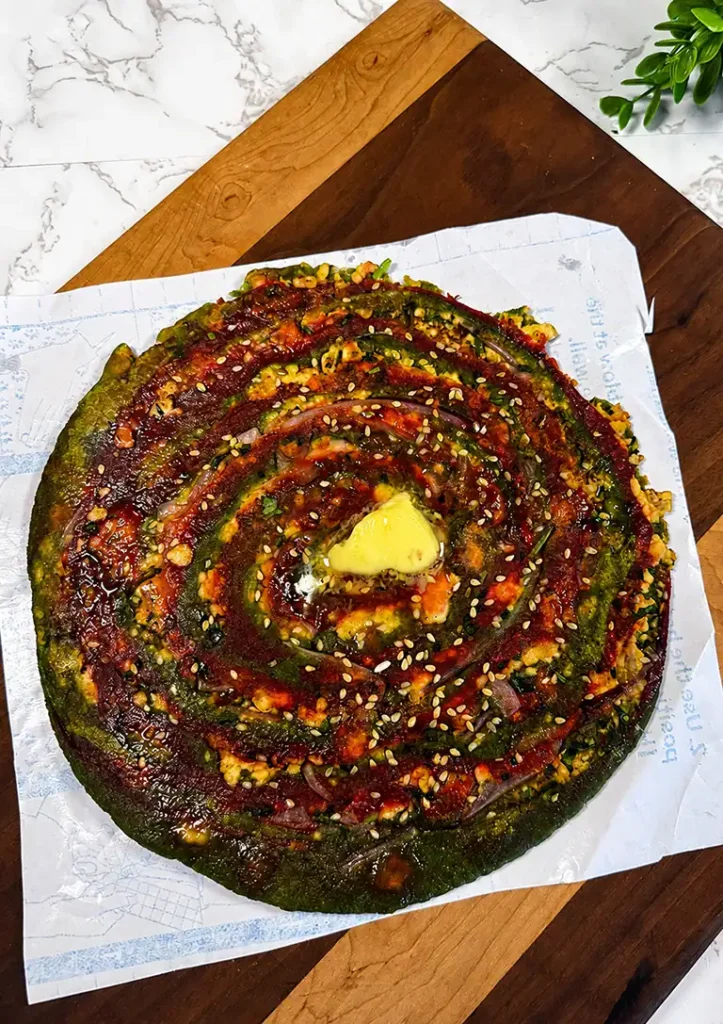
This paratha does two things at once — it looks stunning and it tastes even better. Two doughs, one made with spinach puree and one with beetroot puree, layered around a spiced paneer and onion stuffing, rolled into a pinwheel, and pressed into a flat paratha that reveals a beautiful swirl of green and pink when cut. On the table in under an hour, kids approved, and nutritionally complete in a way that feels effortless.
The colours come entirely from vegetables — no artificial dye, no food colouring. The pink is beetroot. The green is spinach. The white peeking through is paneer. It is the kind of meal that makes people ask how you did it before they have even tasted it.
Both doughs are made the same way — whole wheat flour, salt, and a vegetable puree instead of plain water. The puree does double duty: it adds colour and it adds nutrition, folding iron and calcium directly into the dough without anyone noticing.
Spinach dough: Blend a generous handful of fresh spinach with a little water until completely smooth. Use this green puree to bring the wheat flour together into a soft dough. The colour is a vivid, deep green when first made and settles to a more muted sage green once cooked — still beautiful.
Beetroot dough: Blend one small boiled or raw beetroot with a little water until smooth. Use the pink-red puree the same way. The colour deepens beautifully on the hot tawa — the cooked paratha has a warm rose-pink edge that looks almost intentional.
Both doughs need to be genuinely soft — softer than a standard roti dough. A soft dough rolls without cracking and seals cleanly around the pinwheel layers. Add salt to taste in each. Cover both and rest for 20 to 30 minutes.
On raw vs boiled beetroot: Raw beetroot gives a more vivid, deeper pink in the dough. Boiled beetroot is easier to blend and gives a slightly softer colour. Both work — use what you have.
While the doughs rest, make the stuffing. This is the filling that holds the whole paratha together — well-seasoned, well-balanced, and worth tasting before it goes in.
In a bowl, combine:
Season with:
Mix well and taste. The stuffing should be bold and well-seasoned — once it is inside the paratha and rolled flat, the flavour will mellow. Season it slightly more than feels necessary.
Finish with a scatter of sesame seeds mixed through — they add a gentle nuttiness and a tiny crunch inside the paratha that is lovely.
This is the part that looks complicated and is not.
Step 1: Roll out one spinach roti and one beetroot roti to roughly the same size — medium thin, like a standard roti.
Step 2: Lay the spinach roti flat. Spread the paneer stuffing evenly across the entire surface, all the way to the edges.
Step 3: Lay the beetroot roti directly on top of the stuffing, pressing gently so it adheres.
Step 4: Cut the layered disc into strips — or roll it up tightly from one edge into a log. Then cut the log into rounds.
Step 5: Stack the rounds on top of each other, cut side up, and press gently with your palm into a ball.
Step 6: Roll out gently with a rolling pin into a flat paratha. Roll from the centre outward with light, even pressure. The pinwheel pattern will reveal itself as you roll — you will see the green and pink swirling through.
On rolling pressure: Roll gently and evenly. Too much pressure in one direction will smear the colours together rather than keeping them distinct. The goal is a marbled swirl, not a blended colour. Light hands, rolling from the centre out.
A hot tawa on medium heat. Place the paratha on the dry surface and cook for about a minute until you see bubbles forming and the underside has golden spots. Flip, add butter to the cooked side, flip again and press gently with a folded cloth. Cook until both sides are golden and slightly crispy.
The butter is not optional. It goes on during cooking — not just as a serving garnish — and it is what gives the paratha its golden, slightly crisp surface. A generous pat on each side.
Serve immediately with more butter on top, or with a green chutney and yogurt alongside.
Spinach brings iron and calcium into the dough. Beetroot brings folate and antioxidants. Paneer brings protein and fat. Whole wheat flour brings fibre and slow-release carbohydrates. Sesame seeds add more calcium.
This is not a meal that has been engineered to be healthy — it is naturally balanced because each ingredient is doing something real. And it is genuinely delicious, which is the part that matters most when feeding children.
See the full assembly: @binalstastytales
Stuffed paneer paratha with beetroot and spinach dough — a pinwheel technique that creates a beautiful two-colour swirl. Healthy, kids-approved, and ready in under an hour.
Blend spinach with water until smooth. Mix into atta with salt to form a soft, smooth dough. Repeat with beetroot puree. Cover both and rest for 20 to 30 minutes.
Combine grated paneer, sliced onion, cilantro, green chilies, all spices, and sesame seeds. Mix well and taste — season boldly.
Roll out one spinach roti and one beetroot roti to roughly the same size, medium thin.
Lay the spinach roti flat. Spread the stuffing evenly across the surface. Lay the beetroot roti on top and press gently. Roll up tightly into a log. Cut into rounds. Stack the rounds and press gently into a ball. Roll out into a flat paratha with a rolling pin, using light, even pressure from the centre outward.
Cook on a hot tawa on medium heat for about 1 minute per side. Add butter to each side during cooking and press gently until both sides are golden and slightly crispy.
Serve immediately with extra butter, green chutney, and yogurt.
Made this? Tag me at @binalstastytales — I love seeing the pinwheel reveal.

Hello Passionate food lovers! I’m Binal - a recipe creator, home chef, and food enthusiast. I love experimenting in the kitchen, discovering new flavors, and sharing delicious recipes that bring people together. My greatest passion is helping others create tasty, comforting meals and enjoy every moment of their cooking journey.


