
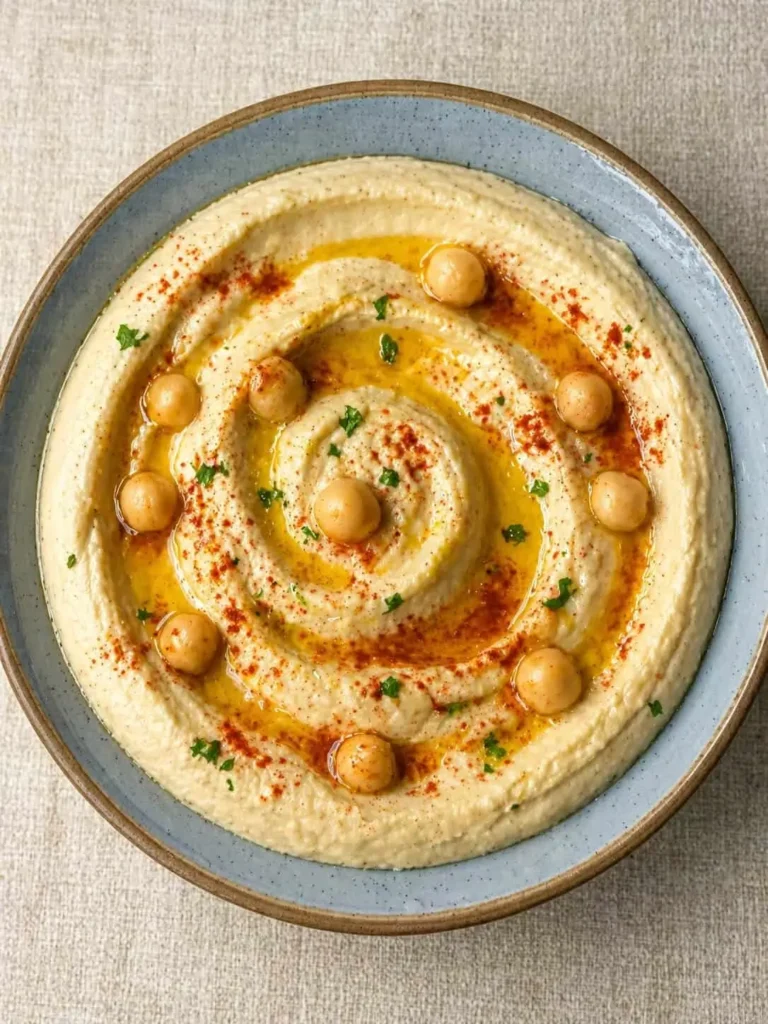
There is a certain kind of Sunday win that does not announce itself. No elaborate meal, no stack of containers, no hours in the kitchen. Just one batch of hummus, blended in five minutes, tucked into a glass jar — and suddenly, every single meal for the next five days has something worth eating holding it together.
This is that recipe.
Creamy, garlicky, properly lemony hummus made from scratch with ingredients you likely already have. It keeps beautifully in the fridge for five to seven days, and it quietly earns its place in more meals than you would expect.
This is exactly how one jar played out:
Monday — falafel bowl, hummus as the base
Tuesday — wrap with roasted vegetables, hummus as the spread
Wednesday — thick on toast, a drizzle of olive oil, done
Thursday — dipping sauce alongside lunch
Friday — back in a bowl again, zero complaints
That is five days of meals with one five-minute effort on Sunday. The kind of meal prep that actually works because it is not prescriptive — hummus fits wherever you need it to.
Store-bought hummus is fine. Homemade hummus is something else entirely.
The difference is texture and freshness — when you blend it yourself, you control how smooth it goes, how much lemon it gets, how loud the garlic is. There are no preservatives softening the flavour or thickening the consistency. It tastes clean and alive in a way that jarred hummus simply does not.
And the ice cube trick is the secret most recipes do not mention.
Adding 3 to 4 ice cubes to the blender while the hummus is processing sounds strange. It works extraordinarily well.
As the ice melts into the mixture, it aerates the hummus and brings the temperature down, which causes the proteins in the tahini to set slightly differently. The result is hummus that is noticeably lighter, fluffier, and creamier — not dense, not heavy. If you have ever wondered why restaurant hummus has that almost whipped quality, this is usually why.
Do not skip this step.
This recipe works with either 3 tablespoons of tahini or 3 tablespoons of sesame seeds blended directly.
Tahini gives you a smoother, more consistent result since it is already a paste. If you are using whole sesame seeds, blend them first for a minute before adding the other ingredients — this gives you a rough in-blender tahini that works perfectly well. The flavour is slightly more textured and nutty, which some people prefer.
Both are good. Use what you have.

Spoon the hummus into a glass jar or container. Smooth the top with the back of a spoon, then drizzle a thin layer of olive oil over the surface. This layer seals in freshness and prevents the top from drying out.
Keeps in the fridge for 5 to 7 days.
Before serving, give it a stir or let it come to room temperature for 10 minutes — cold hummus straight from the fridge can taste a little flat. A fresh drizzle of olive oil and a pinch of smoked paprika or cumin on top makes even day-five hummus feel newly made.
In a bowl — as the base under falafel, roasted vegetables, grains, or a simple chickpea salad. Add olive oil, herbs, and something pickled on top.
In a wrap or sandwich — spread generously instead of mayonnaise or butter. It holds everything together, adds protein, and makes even the most ordinary wrap feel considered.
On toast — thick, with a drizzle of olive oil and whatever you have: sliced cucumber, a soft-boiled egg, chili flakes, za'atar. One of the most underrated quick meals.
As a dipping sauce — with raw vegetables, pita, crackers, or alongside a lunchbox. Protein-rich and genuinely filling.
As a dressing base — thin it slightly with lemon juice and a splash of water, and it becomes a creamy salad dressing that works on everything.
See it come together in real time: @binalstastytales
Creamy homemade hummus made in 5 minutes with chickpeas, tahini, lemon, garlic, and the ice cube trick for an ultra-smooth finish. Meal prep friendly — keeps in the fridge for 5 to 7 days.
Made this? Tag me at @binalstastytales — I love seeing how you use yours through the week.

Hello Passionate food lovers! I’m Binal - a recipe creator, home chef, and food enthusiast. I love experimenting in the kitchen, discovering new flavors, and sharing delicious recipes that bring people together. My greatest passion is helping others create tasty, comforting meals and enjoy every moment of their cooking journey.


