
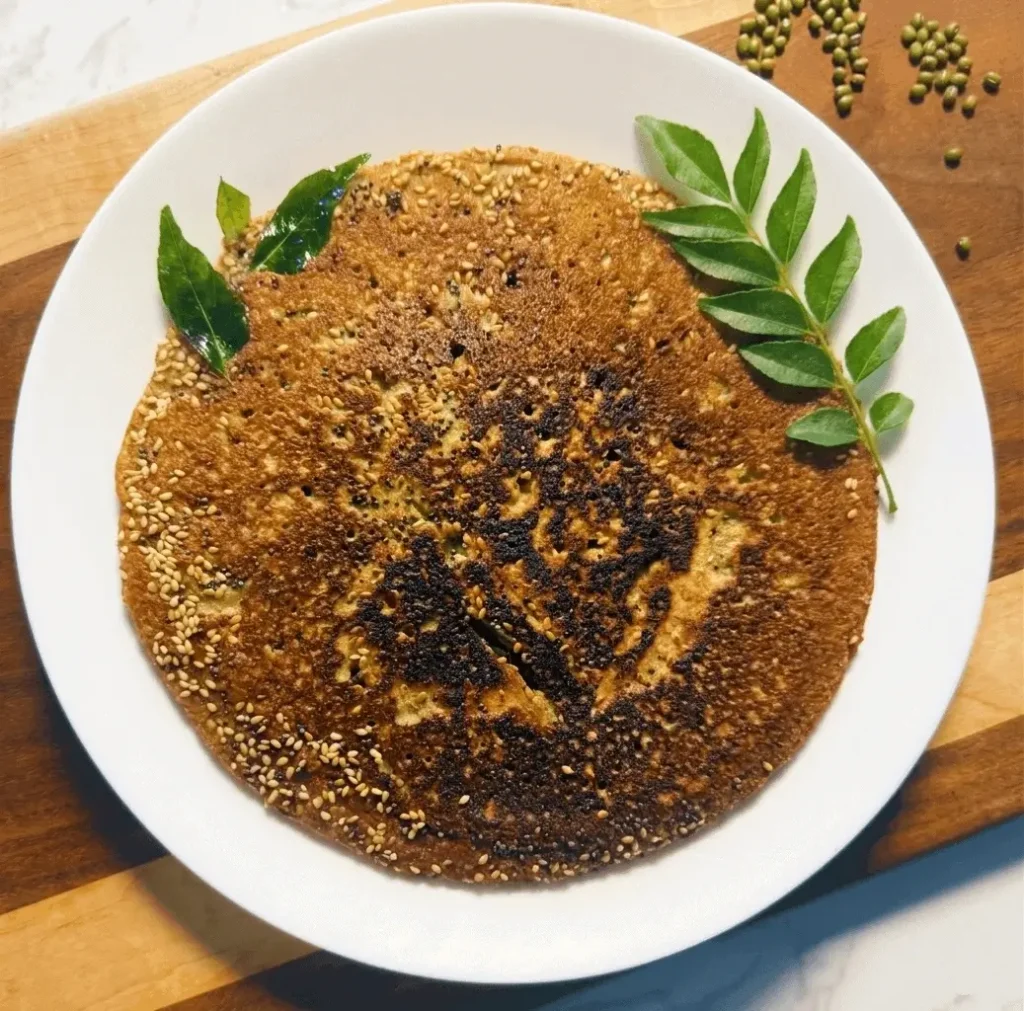
Handvo is one of those recipes that sounds more complicated than it is. Traditionally a fermented Gujarati savoury cake — baked, crispy on the outside, soft and flavourful inside — it is the kind of food that feels deeply nourishing in the way only a well-made homemade dish can. This version skips the fermentation entirely and uses a blend of mung beans, quinoa, chana dal, and red lentils that gives you a naturally protein-rich batter ready to cook the same day.
Carrots and spinach folded through, a proper tempering of mustard seeds, sesame seeds, curry leaves, and asafoetida poured over the top, cooked low and slow in a cast iron pan until the crust is genuinely golden and crisp. Served with green coriander chutney and a cup of chai on the side — this is a meal that feels like the weekend even on a Tuesday.
Traditional handvo uses a fermented rice and lentil batter, which needs overnight soaking and several hours of fermentation time. The fermentation develops a gentle tang and a slightly airy texture. Both are lovely — but they also mean you need to plan a day ahead.
This version gets that tang from Greek yogurt or plain yogurt blended directly into the batter. The yogurt brings acidity, helps the batter hold together, and contributes to the golden crust when it hits the hot pan. The result is not identical to a fermented handvo — it is its own thing — but it is ready in under an hour and is genuinely, satisfyingly good.
Most handvo recipes use rice as a significant portion of the base. Swapping that for quinoa and increasing the pulse ratio turns this into one of the more protein-dense savoury meals you can make in a pan.
Mung beans (1 cup) — mild, slightly sweet, high in protein and easy on digestion. They blend smoothly and form the backbone of the batter.
Quinoa (1 cup) — a complete protein with all nine essential amino acids. It adds a slightly nutty flavour and a lightness to the batter that rice cannot replicate.
Chana dal (½ cup) — earthy, dense, and protein-rich. It gives the handvo body and a satisfying chew.
Red whole lentils (½ cup) — they blend almost completely smooth, adding protein and helping the batter come together with a silky consistency.
Soak all four together for at least 4 to 6 hours, or overnight if you have the time. The longer they soak, the smoother the batter blends and the easier it is to digest.
On soaking time: 4 hours is the minimum. Overnight gives you a noticeably smoother batter and a slightly more cohesive texture in the finished handvo. If you are making this for lunch, soak everything first thing in the morning.
Drain the soaked grains and lentils and add them to a blender with:
Blend until you have a smooth, medium-thick batter — not runny, not so thick it will not spread. Add a small splash of water if needed to reach the right consistency. It should pour from a spoon slowly and hold its shape slightly.
Once blended, transfer to a bowl and add:
Carom seeds are not optional here. They are traditional in handvo for good reason — they add a distinctive warmth and also aid digestion, which is welcome in a dal-heavy dish.
Grated vegetables rather than chopped ones matters here. Grated carrots and spinach (finely chopped or roughly torn) distribute through the batter evenly, cook through at the same rate as the base, and become part of the texture rather than distinct pieces sitting in it.
For this version: carrots and spinach, both grated or finely shredded and folded through the batter just before cooking. Squeeze any excess moisture from the spinach before adding — too much liquid will prevent the handvo from crisping properly.
Other vegetables that work beautifully: bottle gourd (lauki), grated zucchini, or grated paneer for extra protein. Use whatever you have — this is a forgiving recipe.
The tempering is what makes handvo handvo. It is poured directly onto the batter as it goes into the pan, and it creates a fragrant, golden crust on the bottom that is one of the defining textures of the dish.
In a small pan, heat a tablespoon of oil until hot. Add:
Pour this immediately over the batter in the pan. The sizzle is correct. The oil carries the aromatics into the base of the handvo as it cooks.
A cast iron pan gives you the best result — even heat distribution, a properly golden crust, and the ability to hold medium-low heat steadily for the time the handvo needs. If you have one, use it.
Any heavy-bottomed pan works well too. Avoid thin non-stick pans if you can — they tend to have hot spots that brown the base unevenly.
Pour the batter into a lightly oiled pan to about 2 to 3 cm thickness. Pour the tempering over immediately. Cover with a lid and cook on medium-low heat for 12 to 15 minutes. Do not rush this with high heat — the inside needs time to cook through before the outside over-browns.
Check the base by lifting a corner with a spatula. When it is deep golden and lifts cleanly from the pan, it is ready to flip. Flip carefully — use a plate if needed — and cook the other side uncovered for another 8 to 10 minutes until golden.
The handvo is done when both sides are golden and crisp and a skewer inserted in the centre comes out clean.
On flipping: Handvo is thicker than a pancake and needs confidence on the flip. Slide a wide spatula fully underneath, support the top with your other hand or a plate, and flip in one clean motion. If it breaks slightly, press it back together — it will still taste exactly right.
Slice into wedges or squares and serve warm with green coriander chutney — the freshness and acidity of the chutney cuts right through the richness of the dal base and the tempering oil. A cup of chai alongside makes this a complete meal in the most comforting sense.
Handvo also works beautifully as a lunchbox meal — it holds its texture well and is just as good at room temperature as it is warm.
See the full recipe come together: @binalstastytales
High-protein handvo made with mung beans, quinoa, chana dal and lentils — no fermentation required. Crispy, golden, and packed with vegetables. Ready in 40 minutes with green chutney and chai.
Rinse and soak the mung beans, quinoa, chana dal, and red lentils together in plenty of water for at least 4 to 6 hours. Drain before blending.
Add the drained grains and lentils to a blender with the ginger, garlic, green chilies, and yogurt. Blend until smooth and medium-thick. Add a small splash of water only if needed to reach a pourable but not runny consistency.
Transfer to a bowl. Add salt and crushed carom seeds. Fold in the grated carrot and shredded spinach. Mix well.
Heat oil in a small pan until hot. Add mustard seeds and let them pop. Add sesame seeds and toast for 30 seconds. Add curry leaves carefully and asafoetida. Keep ready to pour immediately.
Heat a cast iron pan or heavy-bottomed pan on medium heat and lightly oil it. Pour the batter in to about 2 to 3 cm thickness. Immediately pour the hot tempering over the top. Cover with a lid and cook on medium-low heat for 12 to 15 minutes until the base is deep golden and lifts cleanly.
Flip carefully and cook the other side uncovered for 8 to 10 minutes until golden. A skewer inserted in the centre should come out clean.
Slice into wedges or squares. Serve warm with green coriander chutney and chai.
Made this? Tag me at @binalstastytales and leave a comment — I would love to see your handvo.

Hello Passionate food lovers! I’m Binal - a recipe creator, home chef, and food enthusiast. I love experimenting in the kitchen, discovering new flavors, and sharing delicious recipes that bring people together. My greatest passion is helping others create tasty, comforting meals and enjoy every moment of their cooking journey.


